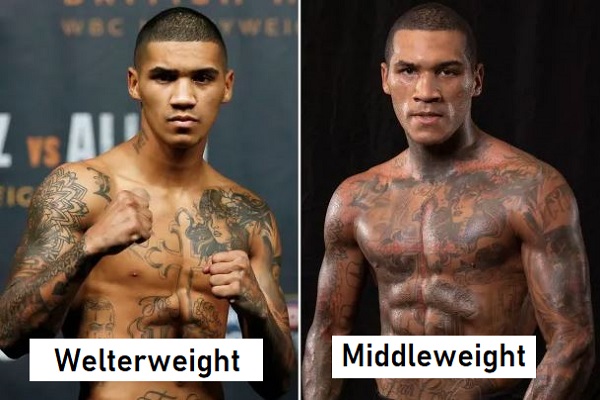
Regarding boxing, the terms “middleweight” and “welterweight” create quite a buzz. In this article, we’ll delve into the world of these two weight classes and Middleweight VS Welterweight | Which Is Best In 2024? So, if you’re curious about the differences between middleweight and welterweight fighters, buckle up and get ready for an informative and exciting ride!
In the boxing ring, weight classes are crucial in ensuring fair and competitive matchups. One of the most popular weight divisions is the middleweight category. Middleweight fighters typically weigh between 154 to 160 pounds, and they possess a unique blend of power, speed, and agility. But don’t underestimate the welterweights! With fighters weighing around 147 pounds, this weight class showcases remarkable finesse and lightning-fast reflexes. So, are you ready to discover the contrasting styles of these two weight divisions?
As we explore the world of middleweight and welterweight boxing, we’ll uncover the distinctive characteristics that set them apart. From the history and notable fighters to the strategies and techniques employed, we’ll dive deep into the heart of the action. So, whether you’re a die-hard boxing fan or a curious newcomer, this article will equip you with valuable knowledge to appreciate and understand the dynamic nature of middleweight versus welterweight bouts. Let’s jump into the ring and explore the captivating world of these two weight classes!
Key Takeaways – Middleweight vs Welterweight
When comparing middleweight and welterweight, there are key factors to consider. Both weight classes have their unique features that make them appealing to different fighters. Middleweight fighters have more size and power, making them better suited for knockouts. On the other hand, welterweight fighters are known for their speed and agility, allowing them to be more elusive in the ring. The decision ultimately comes down to the fighting style and preference of the individual fighter.
1. Middleweight and welterweight are weight divisions in combat sports like boxing and mixed martial arts.
2. Middleweight fighters weigh between 154-160 pounds, while welterweight fighters weigh between 147-154 pounds.
3. Middleweights are typically larger and have more power, while welterweights are generally faster and more agile.
4. Middleweight fights often feature more knockout power, while welterweight fights tend to be more technical and tactical.
5. Middleweight and welterweight champions, like Canelo Alvarez and Manny Pacquiao, have achieved great success and popularity in their respective divisions.
Comparing Middleweight vs Welterweight
Middleweight and welterweight are two weight classes in combat sports, particularly in boxing and mixed martial arts (MMA). These weight divisions determine the maximum weight limit for athletes competing in a certain category. In this article, we will explore the differences between middleweight and welterweight, including their respective characteristics, key features, user experience, pros and cons, and price comparison, and ultimately determine which weight class is better suited for different athletes.
Overview of Middleweight
Middleweight is a weight class that falls between welterweight and super middleweight. In most combat sports, the middleweight division typically has a weight limit of 160 pounds (72.5 kilograms). Fighters who compete in the middleweight division are generally known for their combination of speed, power, and technical skills. Some notable middleweight boxers include Gennady Golovkin, Canelo Alvarez, and Marvin Hagler.
In boxing, middleweight bouts often showcase fast-paced action and a balance between knockout power and agility. Middleweight fighters are adept at utilizing footwork and head movement to avoid punches while delivering their combinations with precision. Their punches pack a significant amount of power, making knockouts a common occurrence in this weight class. Middleweight fights are often crowd favorites due to the high level of skill and excitement displayed by the athletes.
Overview of Welterweight
Welterweight is a weight class below middleweight and above lightweight. In most combat sports, the welterweight division has a weight limit of 147 pounds (66.7 kilograms). Fighters in the welterweight division are known for their speed, agility, and technical prowess. Some prominent welterweight boxers and MMA fighters include Floyd Mayweather Jr., Manny Pacquiao, and Georges St-Pierre.
Welterweight fights are characterized by fast-paced action and a focus on technical skills. Fighters in this weight class possess quick hand speed and footwork, allowing them to move fluidly around the ring or octagon. Welterweight bouts often feature a combination of power punches and precision strikes, as these fighters aim to outmaneuver and outscore their opponents. The welterweight division is highly competitive and has produced many memorable fights throughout history.
Key Features Compared
When comparing middleweight and welterweight, there are several key features to consider. Let’s break down the main factors that differentiate these weight classes.
1. Size and Strength
Size and strength are significant factors that distinguish middleweight and welterweight fighters. Middleweights, with a higher weight limit, tend to have a more muscular and powerful physique than welterweights. Their punches can carry more impact due to their increased size and body mass. However, welterweights have an advantage in terms of speed and agility. They are generally lighter and more nimble, allowing them to move swiftly and deliver quick, precise strikes.
In terms of reach, middleweights usually have longer arms, which can be advantageous for keeping opponents at bay. Welterweights, on the other hand, rely on quick footwork and head movement to navigate around their opponents effectively.
2. Technique and Skill
Middleweights and welterweights both possess high levels of technical skill, but their styles and approaches may differ. Middleweights often exhibit a versatile skill set that combines power punching with agility and defensive techniques. They can engage in close-quarters exchanges while showcasing their technical proficiency.
Welterweights focus on speed, precision, and footwork. They excel in executing quick combinations and evasive maneuvers. Welterweight fighters rely on their ability to outmaneuver opponents and deliver precise strikes. Their fights may feature more tactical battle plans and strategic moves.
3. Competition and Recognition
Both middleweight and welterweight divisions have a long history of talented fighters and memorable bouts. The middleweight category has produced legendary fighters like Sugar Ray Robinson, who is often considered one of the greatest boxers of all time. The middleweight division remains highly competitive to this day, with renowned fighters continually vying for titles and recognition.
The welterweight division has seen a plethora of skilled fighters who have left an indelible mark on the sport. Boxers like Sugar Ray Leonard and Roy Jones Jr. have solidified their legacies in the welterweight division. Mixed martial arts also boasts notable welterweight fighters, with Georges St-Pierre and Kamaru Usman standing out as dominant champions.
Overall, both weight classes offer intense competition and a rich history of talented fighters, making them equally exciting for fans of combat sports.
User Experience
The user experience for athletes in the middleweight and welterweight classes differs based on individual preferences and physical attributes. Some fighters may naturally fit better into one weight class over the other. Here are some key points to consider regarding user experience in each division.
Middleweight User Experience
Middleweights often enjoy the benefits of increased power and knockout potential due to their larger size and muscle mass. The user experience for middleweights may involve focusing on developing punching power and endurance. These athletes typically engage in high-intensity training, including strength and conditioning exercises, to maximize their physical attributes.
In terms of fighting style, middleweights may be more comfortable with one-punch knockout power or wearing down opponents with a series of powerful combinations. They may utilize their size advantage in close-quarter exchanges, relying on heavier punches to dictate the pace and outcome of the fight.
Welterweight User Experience
Welterweights typically prioritize speed, quickness, and agility in their training and user experience. These fighters may focus on developing their footwork and honing their defensive skills to evade opponents’ strikes. The user experience for welterweights might involve enhancing their hand speed and precision, as they rely on landing accurate combinations and avoiding damage.
In terms of fighting style, welterweights excel in throwing rapid combinations and utilizing their speed to outbox opponents. They may prioritize movement and counter-punching, using their agility to stay elusive and capitalize on openings in their opponent’s defense.
Ultimately, the user experience for athletes in both the middleweight and welterweight divisions is shaped by their individual strengths, training methods, and fighting styles.
Pros and Cons
Middleweight Pros
- Greater punching power
- Ability to absorb more punishment
- Potential for exciting knockouts
Middleweight Cons
- Slower speed and agility compared to welterweights
- Could face opponents with significant size and reach advantages
- May require more intensive weight-cutting for some athletes
Welterweight Pros
- Greater speed and agility
- Easier weight management for some athletes
- Potential for higher activity and output in fights
Welterweight Cons
- Less punching power compared to middleweights
- May face opponents with faster reflexes
- Could have size disadvantages against some opponents
Comparison Table
Feature Middleweight Welterweight
Size and Strength Larger and more muscular Lighter and more agile
Technique and Skill Versatile and powerful Speed and precision focused
Competition and Recognition Legends like Sugar Ray Robinson and Boxing greats like Sugar Ray Leonard
Which is Better: Middleweight vs Welterweight
Determining which weight class is better, middleweight or welterweight, ultimately depends on an individual athlete’s physical attributes, fighting style, and personal goals. Both divisions have produced legendary fighters and thrilling matches, showcasing the unique qualities each weight class offers.
For athletes who prioritize power and an exciting knockout potential, middleweight may be the better choice. The larger size and muscle mass in the middleweight division allow fighters to pack a more significant punch and potentially absorb more punishment.
On the other hand, welterweight is ideal for athletes who emphasize speed, agility, and precision. The lighter weight class offers a higher level of quickness and maneuverability, allowing fighters to utilize their footwork and defensive skills effectively.
Ultimately, the decision between middleweight and welterweight boils down to individual preferences and attributes. Athletes must consider their natural strengths, physical characteristics, and fighting styles when determining which weight class suits them best.
Reasons to Choose Middleweight:
- Incredible knockout power
- Ability to compete against larger opponents
- Historically significant weight class
Reasons to Choose Welterweight:
- Lightning-fast speed and agility
- Opportunity for higher activity and output in fights
- Easier weight management for some athletes
Read also more related topics: Middleweight VS Light Heavyweight
Lightweight Vs Heavyweight Boxing
Frequently Asked Questions
Welcome to our FAQ section where we address some common questions about the difference between middleweight and welterweight in combat sports.
How do middleweight and welterweight differ in combat sports?
In combat sports such as boxing and MMA, weight classes are used to ensure fair competition. Middleweight and welterweight are two weight divisions with different upper-weight limits. Middleweight has a higher upper limit than welterweight, meaning that fighters in the middleweight division tend to be heavier than those in the welterweight division.
For example, in professional boxing, the middleweight division typically has an upper weight limit of 160 pounds, while the welterweight division has an upper limit of 147 pounds. This difference in weight limits creates a distinction in size and power among fighters in these divisions.
How does the size difference affect fighters in these weight classes?
The size difference between middleweight and welterweight can have a significant impact on the style and strategy of fighters. Middleweight fighters, being heavier and more powerful, often rely on their size and strength to overpower their opponents. They may have a more aggressive style, looking for knockout opportunities.
On the other hand, welterweight fighters, being lighter and smaller, may rely more on speed, agility, and technique. They often focus on quick footwork and precision strikes to outmaneuver their opponents. This difference in approach makes for an interesting contrast in fighting styles between the two weight classes.
Are there any notable fighters who have competed in both weight classes?
Yes, there have been several fighters who have competed in both the middleweight and welterweight divisions. One example is Anderson Silva, a former UFC middleweight champion who later moved up to compete as a light heavyweight. Another example is Floyd Mayweather Jr., who has won championships in multiple weight classes, including welterweight and super welterweight.
These fighters have showcased their ability to adapt to different weight classes, utilizing their skills and techniques to find success in both divisions. Such achievements highlight the versatility and talent of these fighters.
Can fighters move between the middleweight and welterweight divisions?
Yes, fighters are often able to move between weight divisions, depending on their body composition, training, and goals. However, moving up or down a weight class may require fighters to make certain adjustments, such as changing their diet, training regimen, or fighting style to compete at a new weight.
It’s important to note that drastic weight cuts or jumps can have an impact on a fighter’s performance, as they may experience changes in strength, stamina, and overall conditioning. Proper planning and guidance from trainers and medical professionals are essential when considering a move between weight classes.
Which weight class is considered more prestigious in combat sports?
In combat sports, the prestige of a weight class often depends on the fighters who have competed in it and the historical significance of the division. Both middleweight and welterweight have had legendary fighters and iconic matchups, making them highly regarded weight classes in their own right.
For example, the middleweight division has seen great champions like Marvelous Marvin Hagler and Bernard Hopkins, while the welterweight division has seen legends like Sugar Ray Robinson and Manny Pacquiao. Ultimately, the prestige of a weight class is subjective and can change over time based on the talent and achievements of its fighters.