The way we watch television has completely transformed over the past decade. Gone are the days when families gathered around a bulky TV set connected to cable or satellite dishes. Today, entertainment has become more flexible, personal, and convenient than ever before.
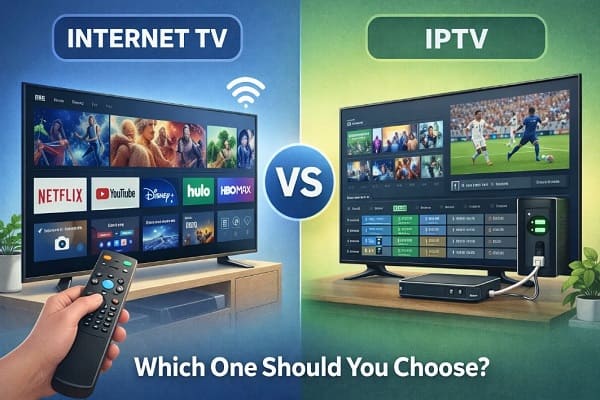
If you’re looking to cut the cord or upgrade your viewing experience, you’ve probably come across two popular options: Internet TV and IPTV. Many people use these terms interchangeably, but they are actually quite different. Understanding the Internet TV vs IPTV difference can help you pick the perfect entertainment solution that matches your lifestyle, budget, and viewing habits.
In this detailed, easy-to-read guide, we’ll break everything down in simple language—from how each works, their pros and cons, real-life examples, to a clear comparison table—so you can make a smart, confident decision.
What is Internet TV?
Internet TV (also known as OTT or Over-The-Top TV) is television content delivered directly through the public internet. Think of it as streaming your favorite shows, movies, or live events just like you browse YouTube or Netflix on your phone.
You don’t need any special cables, dishes, or complicated setups. As long as you have a stable internet connection, you can enjoy content on almost any device.
How Does Internet TV Work?
Internet TV uses your regular broadband connection (Wi-Fi or mobile data) to stream videos. Content is sent in small packets from powerful servers straight to your device through apps or web browsers.
Key Features of Internet TV
- On-demand freedom: Watch whatever you want, whenever you want
- Multi-device support: Works seamlessly on smartphones, tablets, laptops, smart TVs, and even gaming consoles
- Zero installation hassle: Just download an app or open a website—no technician visits needed
- Flexible pricing: From completely free options to affordable monthly subscriptions
Popular Examples of Internet TV Services
- Netflix
- YouTube (and YouTube TV)
- Amazon Prime Video
- Disney+ Hotstar
- Hulu
- Apple TV+
These platforms offer thousands of movies, series, documentaries, and original content.
What is IPTV?
IPTV stands for Internet Protocol Television. Unlike regular Internet TV, IPTV delivers television services through a private, managed network instead of the open public internet.
This controlled network is usually provided by telecom companies or dedicated IPTV service providers. Because the network is managed and dedicated, the experience feels much more stable and premium—like traditional cable TV but delivered over the internet.
How Does IPTV Work?
IPTV providers use their own secure, high-speed private network to send TV signals. This dedicated pathway reduces congestion and ensures smoother delivery of content to your TV or set-top box.
Types of IPTV Services
- Live TV: Watch real-time channels (news, sports, entertainment) just like cable
- Video on Demand (VOD): Huge library of movies and shows you can watch anytime
- Time-Shifted TV: Pause, rewind, or catch up on programs you missed earlier
Key Features of IPTV
- Excellent picture quality (often Full HD or 4K)
- Very stable connection with minimal interruptions
- Interactive controls: pause, rewind, fast-forward, and even record live TV
- Channel packages similar to traditional cable
Internet TV vs IPTV: What’s the Real Difference?
Although both technologies use the internet, their delivery methods, performance, and overall experience differ noticeably.
Here’s a clear breakdown:
Pros and Cons of Internet TV
Advantages:
- Extremely convenient and accessible from anywhere in the world
- Budget-friendly with plenty of affordable or free choices
- Massive variety of content across every genre imaginable
- Super easy to start—no technical knowledge required
- Perfect for families and individuals who love watching on phones or laptops
Disadvantages:
- Quality drops if your internet speed is slow or unstable
- More buffering and loading delays during busy hours
- Live TV can sometimes feel less smooth
- Video resolution may automatically adjust (and drop) based on the connection.
Pros and Cons of IPTV
Advantages:
- Superior and consistent video quality (true HD and 4K)
- Very little buffering—even during live sports or big events
- Excellent for live TV with cable-like reliability
- Advanced features like recording, pausing, and time-shifting
- Feels more premium and professional.
- Some popular IPTV names: Zest IPTV, Polu TV, Streamview IPTV, etc.
Disadvantages:
- Usually more expensive than regular streaming
- May require a set-top box or a specific compatible device
- Setup can be slightly more involved
- Availability and quality depend heavily on your service provider
- Limited in some regions or countries
Which One Should You Choose?
There’s no universal “best” option—it completely depends on you.
Choose Internet TV if you:
- Love watching movies and series on demand
- Want to save money and enjoy flexible subscriptions
- Frequently switch between different devices
- Have a good but not ultra-fast internet connection
- Prefer simplicity and zero hassle
Choose IPTV if you:
- Watch a lot of live TV (sports, news, reality shows)
- Want the smoothest, highest-quality experience possible
- Miss the traditional cable feel with extra modern features
- Are willing to pay a bit more for reliability and stability
- Have a strong, consistent internet connection at home
Pro Tip: Many people actually use both! For example, use Internet TV (Netflix, YouTube) for on-demand binge-watching and IPTV for live sports and news channels.
The Bright Future of Internet TV and IPTV
The world of digital TV is evolving rapidly. With faster internet speeds (thanks to 5G and fiber connections), smarter AI recommendations, and hybrid services that combine the best of both worlds, the line between Internet TV and IPTV is getting thinner.
In the coming years, expect:
- Even better video quality and less buffering
- More personalized content suggestions
- Seamless switching between live and on-demand viewing
- Integration with smart home devices
Frequently Asked Questions (FAQs)
What is the main difference between Internet TV and IPTV?
Internet TV uses the open public internet, while IPTV runs on a private, controlled network for better stability and quality.
Is IPTV better than Internet TV?
It depends. IPTV is generally better for live TV and consistent quality. Internet TV wins when it comes to affordability, flexibility, and ease of use.
Can I use IPTV without the internet?
No. IPTV still needs an internet connection, but it uses a managed network rather than the public one.
Which is cheaper: Internet TV or IPTV?
Internet TV is usually much more affordable, especially with free and low-cost platforms.
Is IPTV legal?
Yes, IPTV is completely legal when you use licensed and authorized service providers. Always choose reputable providers to stay safe.
Final Thoughts: Internet TV vs IPTV
In the Internet TV vs IPTV debate, both options are excellent modern alternatives to traditional cable TV.
Internet TV shines with its unbeatable convenience, low cost, and massive content library—perfect for casual viewers and multi-device users.
IPTV stands out with its superior reliability, high-quality streaming, and live TV performance—ideal for those who want a premium, uninterrupted experience.
Take a moment to think about your priorities:
- What do you watch most (live TV or on-demand)?
- How fast and stable is your internet?
- What’s your monthly budget?
Once you answer these simple questions, choosing between Internet TV and IPTV becomes much easier.
Whichever you pick, one thing is certain: the future of television is digital, flexible, and incredibly exciting. Ready to upgrade your entertainment? Start exploring the options that best match your lifestyle today! If you have any specific questions about your internet speed, budget, or preferred content type, feel free to ask—I’d be happy to help you decide.