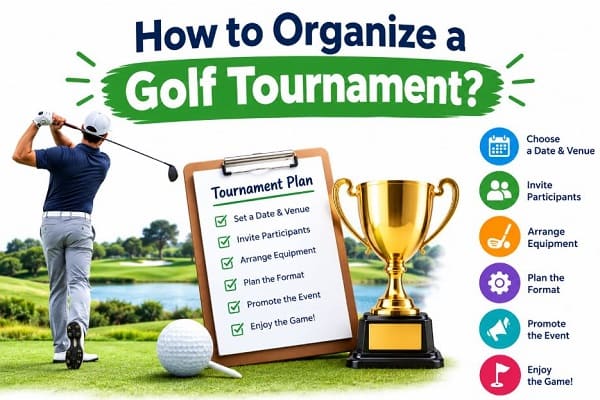
Organizing a golf tournament can feel like a big swing—whether you’re planning a casual day with friends, a corporate outing, or a full-scale charity fundraiser. With the right process, it becomes manageable, enjoyable, and highly successful.
This guide covers everything you need for a smooth golf-organized setup process, from initial planning to post-event follow-up. Weekends suit most charity and social events; weekdays often work better for corporate groups.
How to Organize a Golf Tournament?
We’ll address key long-tail questions like how to organize a golf tournament fundraiser, how to plan a golf tournament fundraiser, and how to set up a golf tournament with friends.
1. Define Your Goals and Purpose
Start by clarifying why you’re hosting the event. Is it pure fun among friends? A networking opportunity for your company? Or a charity fundraiser aiming to raise a specific amount?
- For a casual event with friends: Keep it low-key, focus on enjoyment, and keep costs minimal.
- For a corporate outing: Emphasize team-building, networking, and professional presentation.
- For a fundraiser: Set a clear financial goal (e.g., $10,000–$50,000+) and decide how proceeds will be used. This shapes every decision that follows, including entry fees, sponsorship packages, and add-on activities like raffles or silent auctions.
Write down your primary goals, target number of players (typically 72–144 for a full field), and ideal date range. This foundation guides the entire golf tournament setup process.
2. Form a Planning Committee and Set a Timeline
Don’t try to handle everything alone. Assemble a small committee with clear roles:
- Tournament chair (overall coordinator)
- Sponsorship and fundraising lead
- Logistics and course liaison
- Marketing and registration
- Day-of operations and volunteers
Begin planning 6–12 months for larger events or fundraisers. A tighter 3–6 month window works for smaller friend groups. Create a shared checklist or simple spreadsheet to track deadlines.
3. Choose the Date, Course, and Format
Date selection matters. Avoid major holidays, local events, or competing tournaments. Factor in regional weather patterns and have a rain policy ready.
Course selection is critical. Visit potential venues and discuss:
- Capacity and shotgun start options
- Green fees and cart availability
- Food and beverage packages
- Rain policies and cancellation terms
- On-course amenities (range balls, practice facilities)
Book early—popular courses fill up months in advance.
Format options should match your audience:
- Scramble (most popular for mixed-skill and charity events): Teams play from the best shot each time. Fun, fast, and inclusive.
- Best ball / Better ball: Everyone plays their own ball; the lowest score counts for the team.
- Shamble: Best drive, then individual play.
- Stroke play or Stableford: Better for more competitive groups.
A four-person scramble with a shotgun start is ideal for most fundraisers and friend outings because it keeps play moving and levels the field.
4. Build a Realistic Budget
List every expense and revenue source. Typical costs include:
- Green fees and carts
- Food and beverages (breakfast, on-course snacks, post-round lunch or dinner)
- Prizes, trophies, and player gifts
- Signage, scorecards, and printing
- Marketing and registration platform fees
- Insurance and contingency (10–15% buffer)
Revenue usually comes from player entry fees, sponsorships, mulligan packages, raffles, and auctions. Price entry fees competitively based on local rates and inclusions (often $100–$250+ per player depending on the course and amenities). For fundraisers, aim for sponsorships to cover a large portion of fixed costs so more entry fees go toward the cause.
5. Secure Sponsors and Build Packages
Sponsorships often make or break a successful fundraiser. Create tiered packages (Title, Hole, Cart, Beverage, etc.) with clear benefits: signage, logo placement, free foursomes, speaking opportunities, or product sampling.
Reach out early to local businesses, past supporters, and personal networks. Offer in-kind donations (prizes, food, gifts) as well as cash sponsorships. Strong sponsorship support is one of the most effective ways to maximize funds raised when learning how to plan a golf tournament fundraiser.
6. Handle Registration, Promotion, and Pairings
Set up easy online registration (many free or low-cost platforms work well). Collect player names, handicaps (if needed), contact info, and any special requests.
Promote through email, social media, your website, local clubs, and word of mouth. Highlight the cause (for fundraisers), the course, format, and any unique contests (longest drive, closest to the pin, hole-in-one insurance).
Close registration 1–2 weeks before the event. Create balanced pairings and assign starting holes or tee times. Send players a final confirmation with schedule, rules, dress code, and directions.
7. Plan Contests, Prizes, Food, and Day-of Logistics
Add excitement with on-course contests: longest drive, closest to the pin, straightest drive, or a hole-in-one challenge. Consider a putting contest or skills challenge near the clubhouse.
Order prizes and player gifts in advance (balls, towels, apparel, gift cards, or custom items). Arrange catering that fits the schedule—light breakfast or coffee, on-course snacks, and a proper post-round meal or reception.
Recruit and brief volunteers for registration, scoring, hole monitors, and awards. Prepare a detailed day-of timeline covering registration opening, shotgun start, pace of play monitoring, scoring, and the awards ceremony.
Understanding typical round times helps with scheduling. Most 18-hole rounds take about four to five hours depending on group size and course conditions—see our guide on how long 18 holes of golf take for more details.
Make sure everyone knows how to properly record scores. A clear explanation of how to read a golf scorecard can help newer players and keep scoring smooth.
8. Execute on Tournament Day and Follow Up
Arrive early. Have registration, carts, scorecards, and signage ready. Keep communication clear with a PA system or radios if available. Monitor pace of play and be ready to address any issues quickly.
After the round, host a relaxed awards ceremony, announce winners and contest results, thank sponsors and volunteers, and (for fundraisers) share the preliminary fundraising total.
Within a few days, send thank-you notes to players, sponsors, and volunteers. Share photos, final results, and the impact of any funds raised. Collect feedback for next year.
Special Tips for Different Types of Events
How to organize a golf tournament fundraiser
Focus on sponsorships, higher entry fees with a donation component, and extra revenue streams (mulligans, raffles, auctions). Highlight the cause throughout marketing and on the day. Aim to cover fixed costs with sponsorships so player fees generate pure fundraising dollars.
How to set up a golf tournament with friends
Keep it simple. Choose an accessible course, use a scramble format, keep entry fees low or split costs evenly, and prioritize fun over perfection. Potluck-style food or a casual cookout often works better than formal catering.
Corporate or mixed-skill groups
Scramble or shamble formats keep everyone engaged. Include networking time before or after play and consider branded gifts or photo opportunities.
Final Checklist for Success
- Goals and budget locked in
- Course and date confirmed with contract
- Format, contests, and prizes decided
- Sponsors secured
- Registration open and promoted
- Pairings and day-of schedule complete
- Volunteers briefed
- Rain plan ready
- Post-event thank-yous planned
Organizing a golf tournament rewards careful preparation. Whether you’re running a relaxed day with friends or a high-impact charity fundraiser, following this structured golf-organized setup process will help you deliver a memorable, well-run event that players and sponsors will want to return to year after year.
For more golf insights—from reading scorecards and understanding round times to exploring unique formats like beach golf—explore the full range of resources on LiveSportWorld. Now grab your committee, lock in that course, and start planning your next great day on the links.